
“When you help someone up a hill, you find yourself closer to the top.” –– Brownie Wise
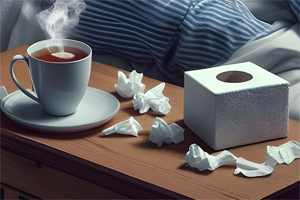
In July, I came down with Covid. I had Covid once before; it was a minor case from which I bounced back quickly. Not so this last time. This time I was down for almost two weeks. And even now as I write this, I still have lingering effects –– some congestion, a raspy throat, occasional cough. Minor fatigue. This was not part of my plans for the summer.
However, what bothered me more than any of the physical symptoms was what it did to me emotionally. It seems that the black bag I keep trying to leave behind, the one full of every mistake or misstep I ever made, swelled in size, even more full than the wicker trash can I moved from bed to couch and back, constantly overflowing with snotty tissues.
STEPS IN CONFLICT
It just so happens that during the time I was ill, Richard Rohr, the Franciscan priest I follow through his Daily Meditations, was writing of how the teachings of Jesus mesh with the Twelve Steps of Alcoholics Anonymous.
As in the past when reading the Twelve Steps, I found myself again struggling with steps four and five in relationship to steps six and seven. Four and five are as follows: made a searching and fearless moral inventory of ourselves, and admitted to God, to ourselves, and to another human being the exact nature of our wrongs. Steps six and seven say (we need to be) entirely ready to have God remove all of these defects of character, and then humbly ask God to remove our shortcomings.
I wrote to a dear friend who has been in recovery for some thirty years and still active in AA. I asked how I am to act on these steps without underscoring that, yep, I fall short. Translation: I have no value.
A MISSING PIECE
 Even as I wrote to him, I knew I was missing something. What am I trying to prove by questioning my worth? I felt like I was groping my way to an answer that was just out of reach. I wondered if by naming my wrongs, I wasn’t just feeding my ego to reinforce my negative image of myself.
I know enough that thinking I am worthless is off base. But there was something more to learn. I could feel it inside, trying to push through, but I seemed to lack the words –– until my friend replied.
ALL ABOUT ME –– NOT
He wrote that step seven is not about “beating ourselves up; it’s acknowledging … how often we grow to love our shortcomings … (they become) the foundation by which we make our way through the world, claiming we are just ‘being ourselves.’”
That is when it clicked, the words I could not quite grasp came into focus: my self-criticism had become a type of self-absorption.
A therapist I once worked with said he never met anyone as self-critical as I was. I realize now that had become a badge of honor. I say I do not want to be a victim, but I can see that my clinging to a lack of worth had become a type of victimhood –– one imposed on myself.
FEELINGS ALWAYS FOLLOW
So while lying around, blowing my nose and sucking on cough drops, drinking ginger ale and popping acetaminophen and ibuprofen, all of which were part of taking care of myself physically, I worked to develop a new inner dialogue. I could see that the old dialogue was as much of a sickness, if not more so, as Covid.
“Feelings follow behavior,” writes Gordon Livingston –– not the other way around.
“Most people know what is good for them, know what will make them feel better: exercise, hobbies, time with those they care about,” he continues. “They do not avoid these things because of ignorance of their value, but because they are no longer ‘motivated’ to do them. They are waiting until they feel better. Frequently, it is a long wait.”1
I am finally tired of waiting.
A NEW APPROACH
So what do I plan to do when I feel useless? Well, now that I am feeling better physically, I will look to do something useful –– perhaps help a neighbor. And how do I plan to respond when some inner voice says I am worthless? I will look to do something worthwhile – such as going for a walk in the woods. Either of these activities are far better ways to spend my time than criticizing myself, doubting my worth, thinking my life has been for naught. Indeed, there are many ways to care for the inner self.
Now, I am sure there will come a day when I look behind me and once again see that ugly black bag. When that day comes, I hope to call to mind three of the questions that the Benedictine nun Macrina Wiederkehr used as part of her daily “Examen of Consciousness”:
- Have the ears of my heart been opened to the voice of Divine?
- Have the ears of my heart been opened to the needs of my sisters and brothers?
- Have the eyes of my heart beheld the Divine face in all created things?2
Certainly these questions are as good of an antidote to self-absorption as anything else.
FOR REFLECTION: How would you rate your own inner dialogue? Does it add to the quality of your life or detract from it? What are ways you can change it for the better? Are you willing to do so?
1Gordon Livingston, M.D., Too Soon Old, Too Late Smart: Thirty True Things You Need to Know Now (Philadelphia, PA: Da Capo, 2008), 28, 29.
2Macrina Wiederkehr, Seven Sacred Pauses: Living Mindfully through the Hours of the Day (Notre Dame, IN: Sorin Books, 2008), 168.
Top image: Pixbay/myshoun
Midtext image: Pixabay/Willi Heidenlbach
Side image: Pixabay/Avelino Calvar Martinez
