
 “The planet does not need more successful people. The planet desperately needs more peacemakers, healers, restorers, storytellers and lovers of all kinds.” – Dalai Lama
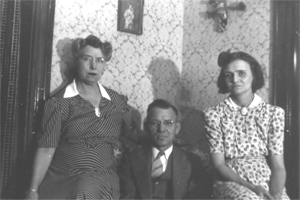
I never knew my grandparents. They were all dead before I was born. So I was pleased when my mother took the time after she retired to put together a family genealogy as a gift to my siblings and me. Now I am working on a similar project for my great nieces and nephews, one that includes photographs.
As I look at photos of grandparents and their parents, I wonder who these people were, what they thought, and how their lives might have shaped my own. I look at their faces, so serious their expressions, as is the case with many photographs taken during the early part of the last century. Their expressions both hide and reveal a strength that I see running through my own veins, a continual thread.
WHAT ANCESTORS PASS ON
From generation to generation, people pass on, through their genetic makeup, skin and eye color, height and bone structure, as well as other characteristics related to health, such as a propensity for certain types of cancers or a tendency toward addictions, such as alcoholism. They also pass on certain talents and skills, and they pass on certain understandings and world views.
Many of us can look back through our ancestry and see patterns. Not always –– there are always outliers –– but there tends to be some consistent behaviors we follow in building our own lives. Just as I have been shaped by my parents, they in turn were shaped by theirs, and on back.
CASUAL REMARKS
I see two casual remarks by each of my parents as instrumental in shaping who I am. Both remarks, spoken at different times, almost as asides, were mere observations and certainly not meant as wisdom to be passed down. Nonetheless I see their significance to my own life.
My mother was a kind-hearted woman. I recall her once saying how she never wanted to hurt anyone’s feelings. I remember thinking at the time that I wanted to be like that, someone who was kind and never deliberately hurt another’s feelings.
And then there was my father’s comment. I was in the car with him, and asked about the “Loyal Boosters,” a club affiliated with the saloon he frequented.
“Is it a social club? Or does the club do some good?” I asked.
“It’s social,” he said. “Maybe they should do something more, some good in the community.”
MY PARENTS’ LEGACIES

As best as I can tell from family stories, my father was an intelligent man, a good student until he was a young teen. That was when his father told him there would be no money for him to go to college as Dad dreamed of doing. Within a few years, Dad lost all interest in his studies and dropped out of high school. He worked as a clerk for the rest of his life, a position far below his potential. Drinking beer, which is a significant part of our German heritage, became an escape.
When I was thirteen, just as his father told him that he could not go to college, my father said the same to me. There would be no money, he said.
As for my mother, she was always hard working and helped support our family as I was growing up, so unlike the mothers of many of my friends. Not only did her income secure our family finances, but she also showed me, by her actions, not her words, that work could also be a type of solace. When you do not know what to do, do not know which way to turn, you go to work.
When my father told me I could not go to college because he could not pay my way, I took it out of his hands, pulling upon the determination I gained from my mother. You do what you must do to get to where you want to be. My response to my father telling me there would be no money for college? I will pay my own way. And I did just that.
A MERGING OF LESSONS
Over the years, people have commented on my tenacity. I don’t easily let go. This tenacity and tendency for hard work is certainly rooted in lessons from my parents. I suspect that tendency was sparked to life when Dad said I could not go to college. I just picked up on Mom’s example of hard work. Juggling jobs and classes part time for years is what put me through undergraduate and later graduate school.
As for my interest in social justice, continually looking for ways that I can build toward the common good, I see that too rooted in my parents’ causal remarks –– to be kind and work toward some good. But these lessons were not totally shaped within the confines of my family home. I recognize how I was also shaped by a liberal understanding of the Catholic faith in which I was reared and my coming of age during the anti-war protests of the late 1960s and early ‘70s.
In other words, I see how I took what I learned from the lives of my parents and then used my own experiences to make the lessons my own.
A UNIVERSAL PARADE
Fr. Richard Rohr writes: “We all need to feel and know, at the cellular level, that we are not the first ones who have suffered, nor will we be the last. Instead, we are in one universal parade—God’s ‘triumphal procession,’ as Paul calls it, using the metaphor of a Roman triumph after a great victory (2 Corinthians 2:14). In this parade, he says, we are all partners with both the living and the dead, walking alongside countless ancestors and descendants who were wounded and longed for healing.”1
And to Fr. Rohr’s words I add, we are not the first, nor will we be the last, to know joy, stand in awe, or have gifts to share. That too, is part of the triumphal procession, the universal parade.
I see my ancestors serving as they could, as they understood best, limited as that understanding may have been. I look to do the same, to do my part to move us as a species closer to the vision that I believe the Godhead holds for us, “the kingdom.”
This brings me to the question: how am I shaping those who follow me?
WHAT I PASS ON
I can do nothing about my family’s physical characteristics, but I can give shape to what I pass on mentally, emotionally, socially. So I ask: what gifts do I want to leave for my heirs to build on? What does it mean to be a good ancestor?
I see how my actions impact the people around me, whose actions in turn impact others. That is why it is important to me that my actions are rooted in that which contributes to building up the good for all, fail as I often do, so the grace flows on, to do as God asks, “ … do justice, and to love kindness, and to walk humbly with your God” (Micah 6:8). It is my way of being a good ancestor. It is my way to pass on to my great nieces and nephews more than binders of names and dates and old photographs.
FOR REFLECTION: What do you see as being passed down to you through your family ancestry? What do to you want to pass on to those who will follow you?
1Richard Rohr, The Tears of Things: Prophetic Wisdom for an Age of Outrage (Convergent, 2025), 101.
Top image: Publisher’s personal photo
Midtext image: Publisher’s personal photo
Side image: Pixabay/Avelino Calvar Martinez
